INTRODUCTION
My goal with this project was to develop a survival horror experience inspired by iconic titles such as Outlast, Amnesia: The Bunker, and Resident Evil 7: Biohazard. I wanted to immerse the player in the immediate horrors of war, capturing the same visceral intensity that Battlefield 1 achieved so perfectly in its opening sequence.
To evoke this atmosphere, I focused heavily on spatial audio, immersive VFX, and carefully timed jump scares to keep the player on edge.
The Setting & Narrative The level is set within the claustrophobic trenches of World War I. You play as a lone soldier tasked with a grim objective: investigate the disappearance of the Second Battalion, who fell silent several days ago. As you navigate the decaying trenches and the dark corridors of the bunker, you must piece together the haunting mystery of what truly happened to your comrades.
Walkthrough
BREAKDOWN
4 weeks half-time (4 hours/day).
Made with Unreal Engine 5.6
Focus on Visual Storytelling, Scripted Events, and VFX.
I make scripts and assets except for the following:
Blockout Tools Plugin
Mixamo Animations
Unreal Horror template
What I wanted to create with this level was a feeling similar to the intro of Battlefield 1, where you play as a soldier who dies and is replaced by another, highlighting the many young lives lost in war. In this level, I wanted to portray not only the horrors of war but also the character's growing despair as he enters the trench. This is introduced early through his thoughts, showing uncertainty as he is forced to move forward. He has been sent to investigate a company that stopped responding over the radio days ago, with little to no information about what awaits him.
The level begins in a hectic and intense situation, with bombs falling and planes diving, creating a sense of urgency and chaos. Even though the outside is “open”, the player is restricted to moving forward or backward, reinforcing that lack of freedom and control. However, as soon as the player enters the bunker, the pacing shifts. The experience becomes slower and more exploratory, with multiple rooms and spaces that are revealed through environmental storytelling. This is further reinforced by the character’s constant inner dialogue, guiding the player while also reflecting their mental state.
Beyond the physical environment, I wanted the experience to make the player reflect on what it would feel like to be in the soldier’s position sent on a mission without context, simply moving from point A to point B. Along the way, the player encounters disturbing elements such as dead bodies and soldiers killed in their sleep. The “monster” in the game is intentionally ambiguous. It is not a traditional horror creature, but something shaped by the player’s interpretation. It could be a soldier driven mad by shell shock, a result of experiments, or something supernatural. The player is left to decide what it represents. Ultimately, the monster and the virus act as metaphors for the horrors of war, something that inevitably catches up to you, no matter how you try to escape it.
Narrative
OVERVIEW
Path to bunker/Outside
Below the Wire
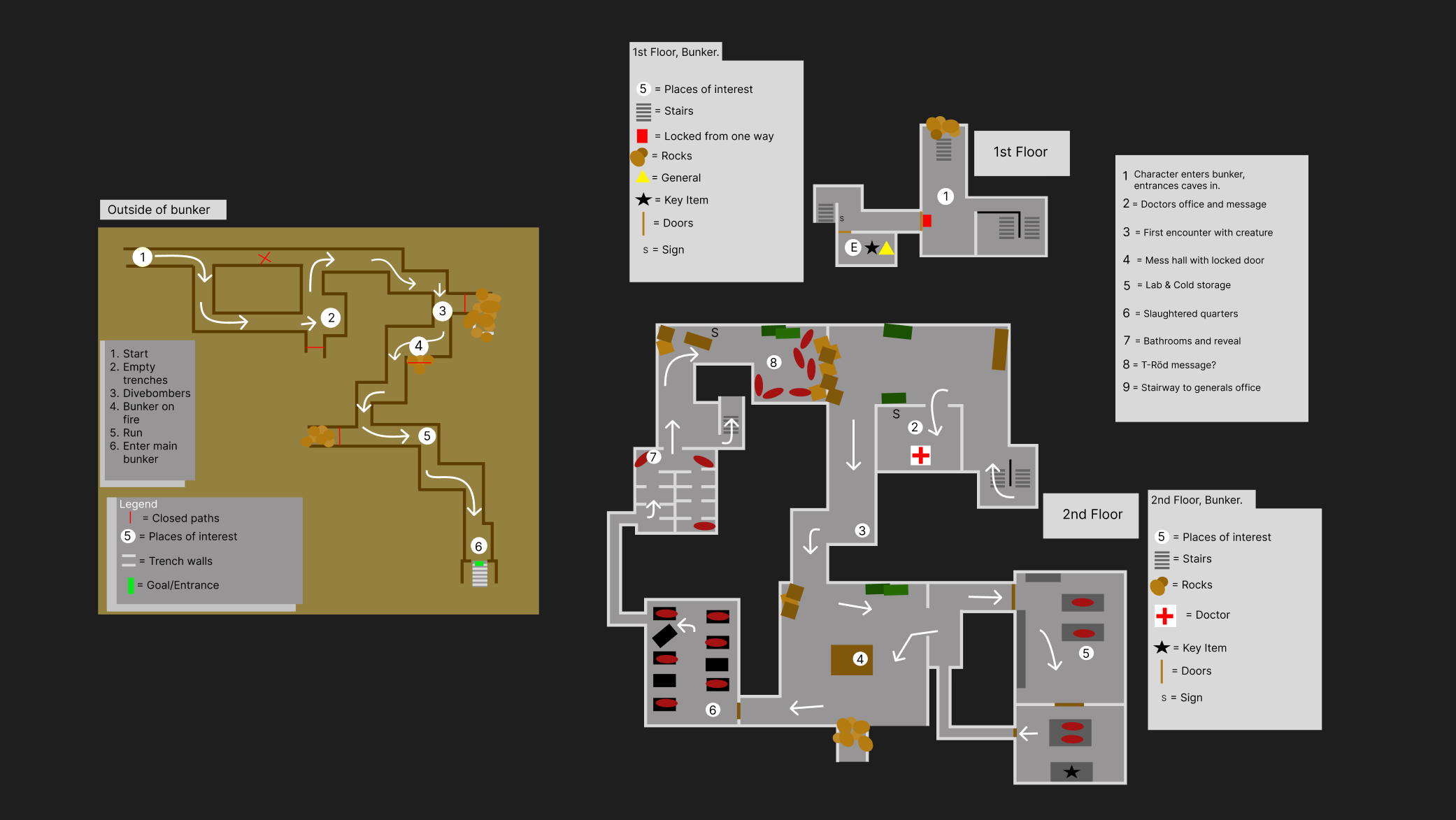
TENSION GRAPH
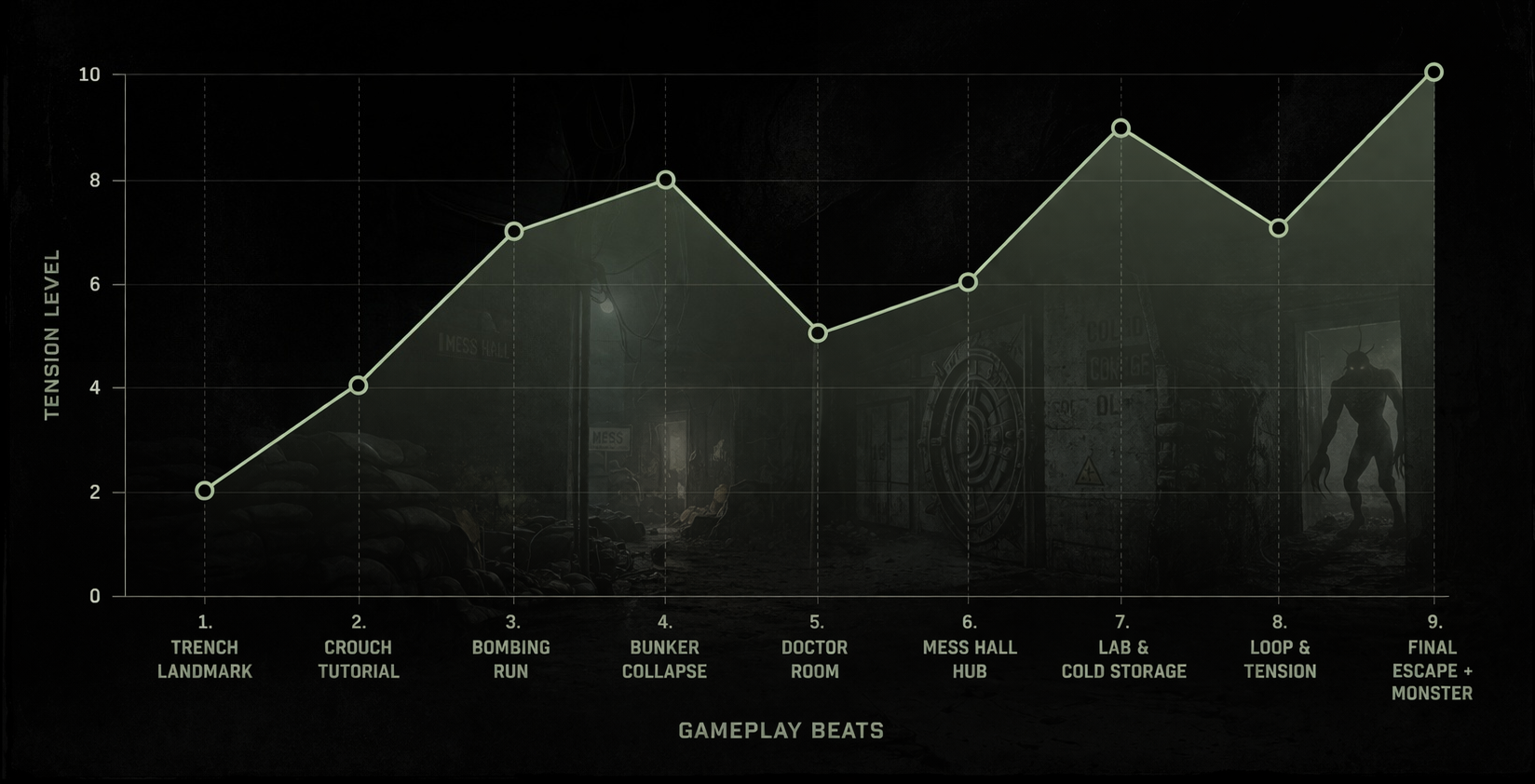
DESIGN TECHNIQUES & WALKTHROUGH
ACT I
1. The Burning Landmark
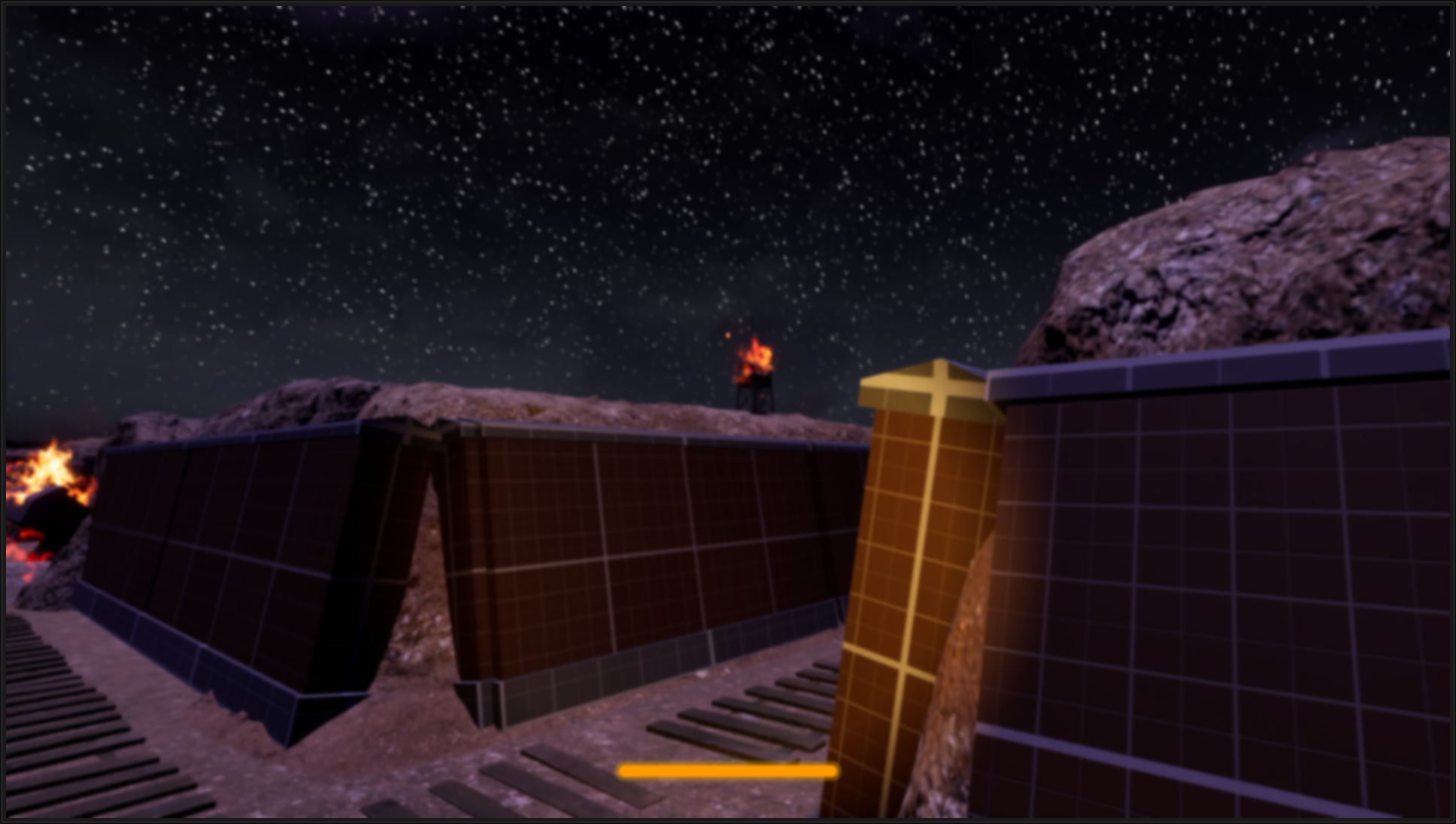
Scene: Player enters the trench and sees the burning radio tower.
Landmark & Goal Orientation
Design techniques:
Landmarking — tower establishes direction
Vista/framing shot — immediate visual goal
Goal orientation — player understands the destination
Visual hierarchy — the tower stands out in the environment
2. The Terrors
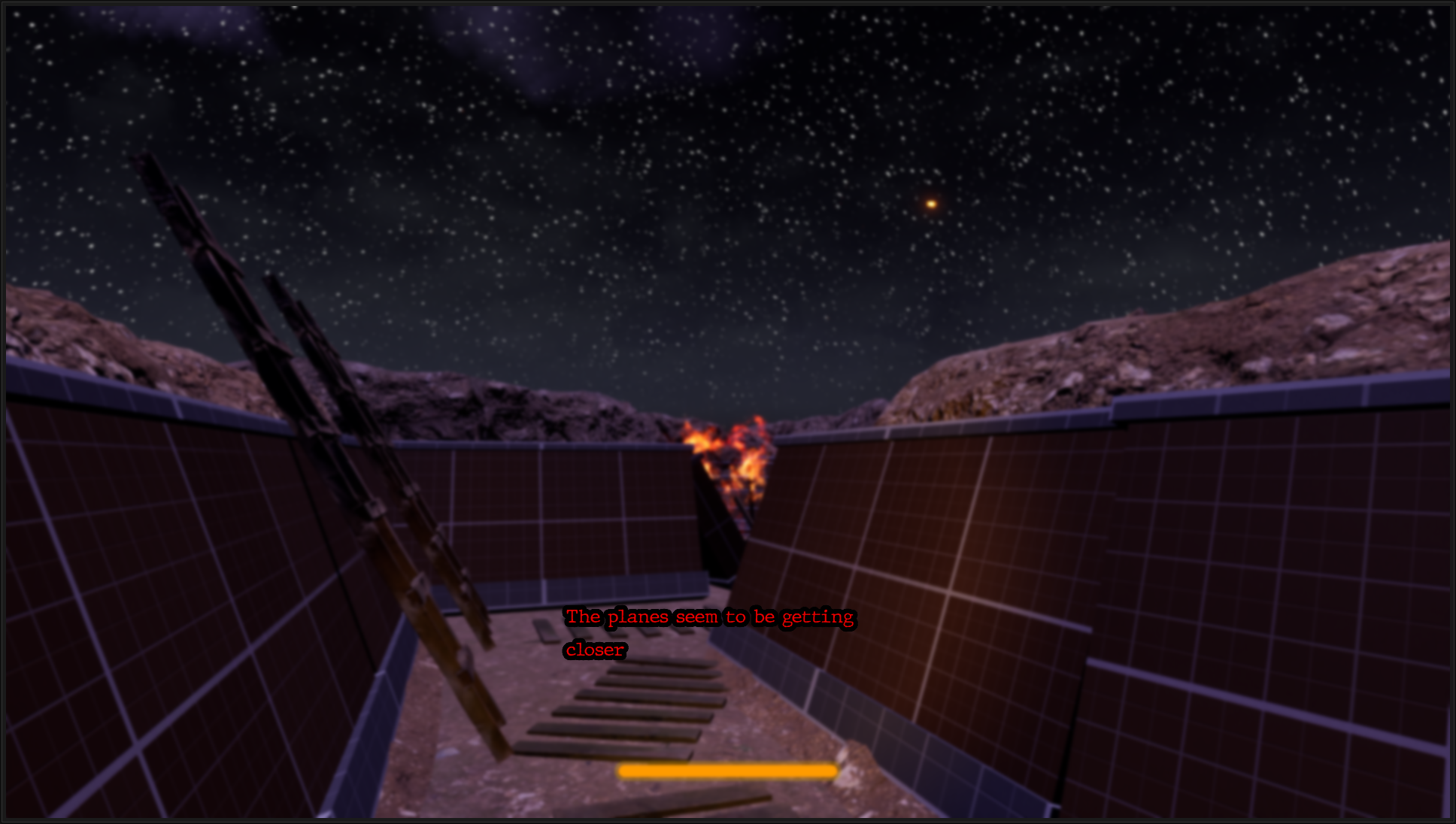
Scene: Planes approach, player learns to crouch.
Design Techniques:
Player Onboarding — Introduces crouching
Audio Cues — Planes signal danger
Anticipation — Threat before impact
Funneling — Forces player forward
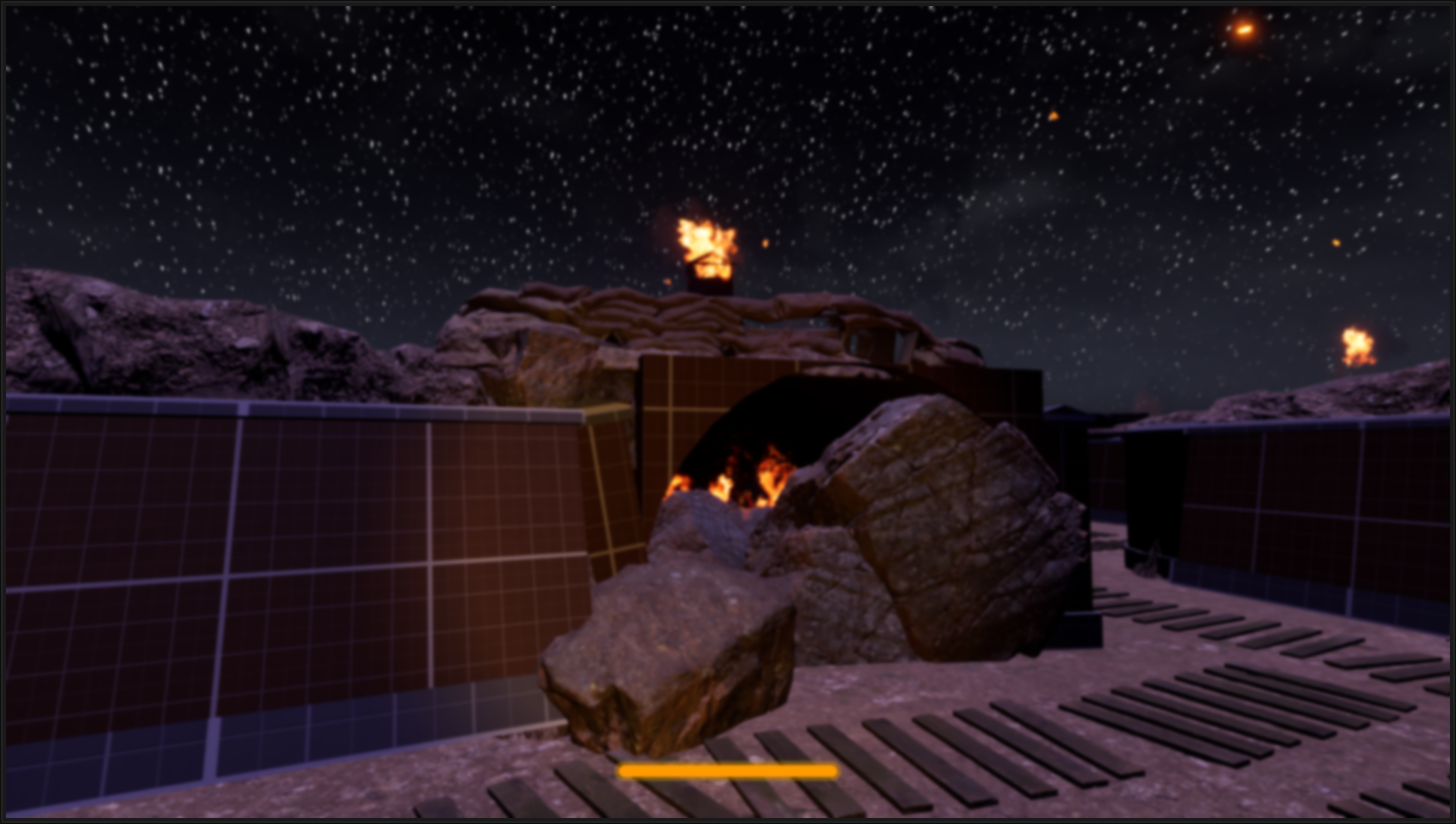
3.The Dead Sprint
Scene: Bombing forces player toward bunker, forced movement.
Design Techniques:
Escalation — Increased intensity
Forced Urgency— Player must move
Foreshadowing— Destroyed bunker
Pacing Spike— Sudden intensity jump
ACT II
4.The Teaser & The Doctor
Scene: Bunker collapse — Doctor’s office, locked in.
Design Techniques:
One-Way Progression— No turning back
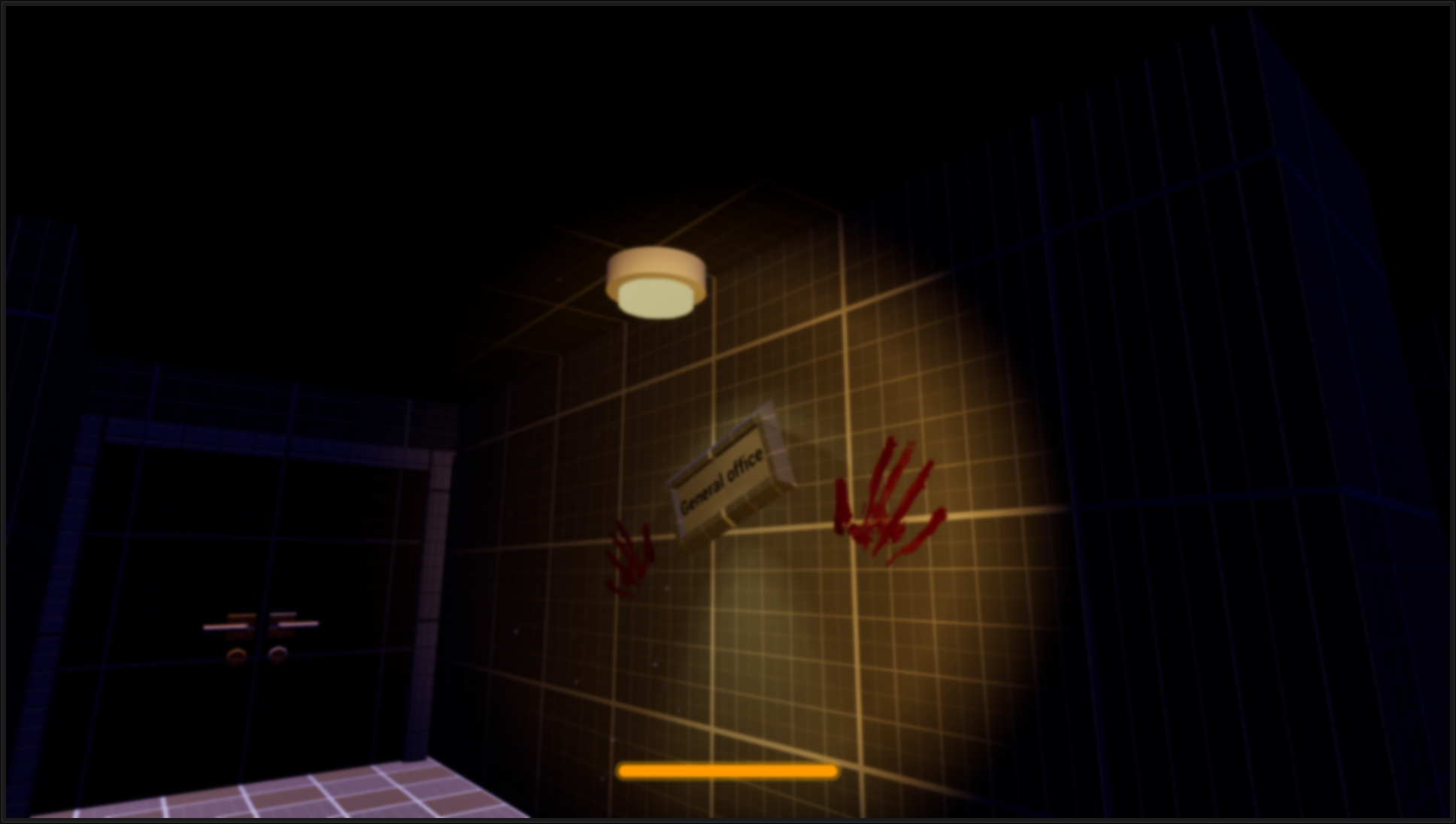
Breadcrumbing— Blood trails guide the player
Environmental Storytelling— Dead doctor, propaganda
Red Herring— “Don’t let it out”
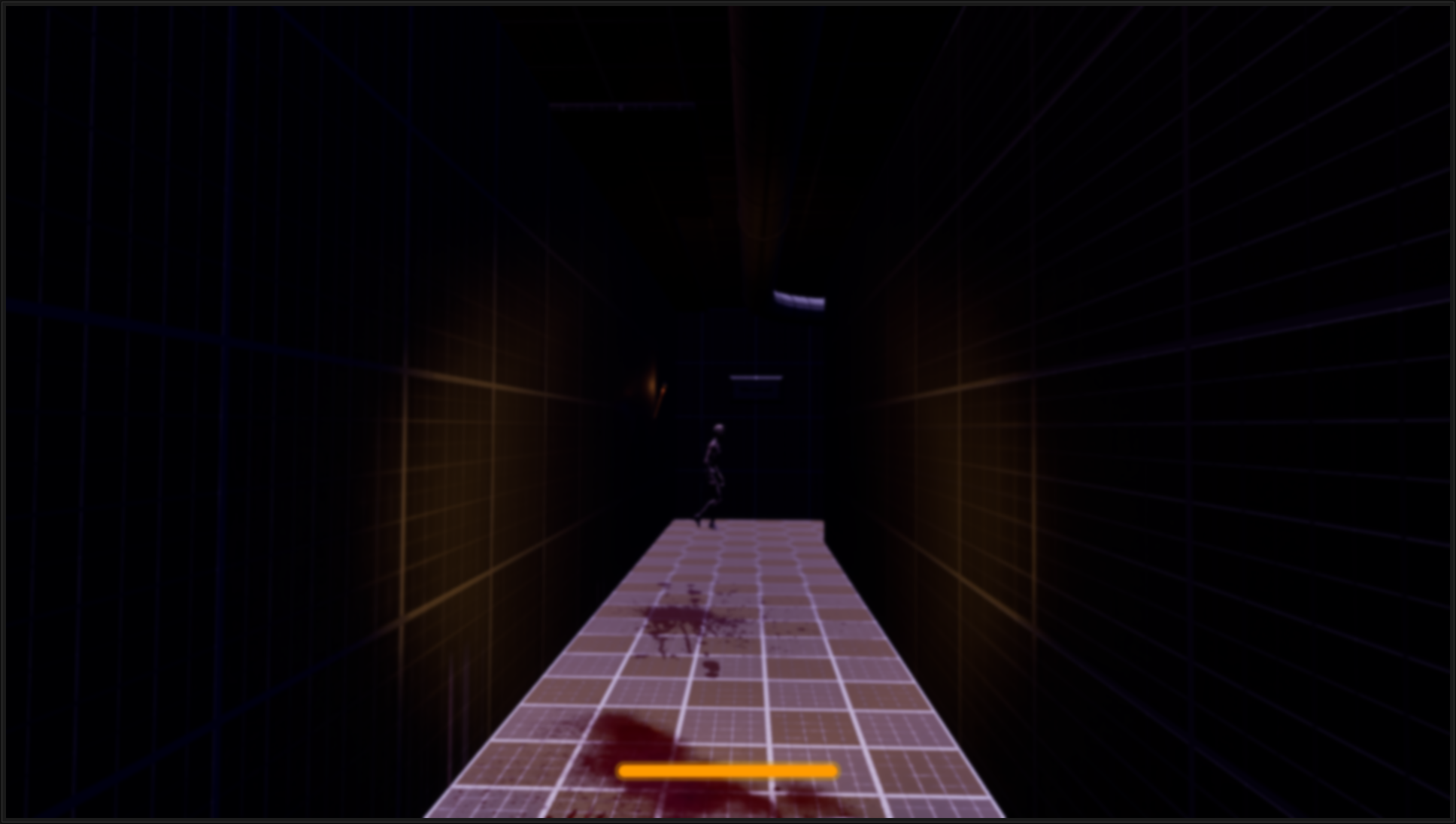
5. Shadows in the Hall
Scene: Creature glimpse → Mess hall, Hub
Design Techniques:
Jump Scare Beat— Short tension spike
Leading Lines— Pipes guide direction
Diegetic Indicators— Blood + movement
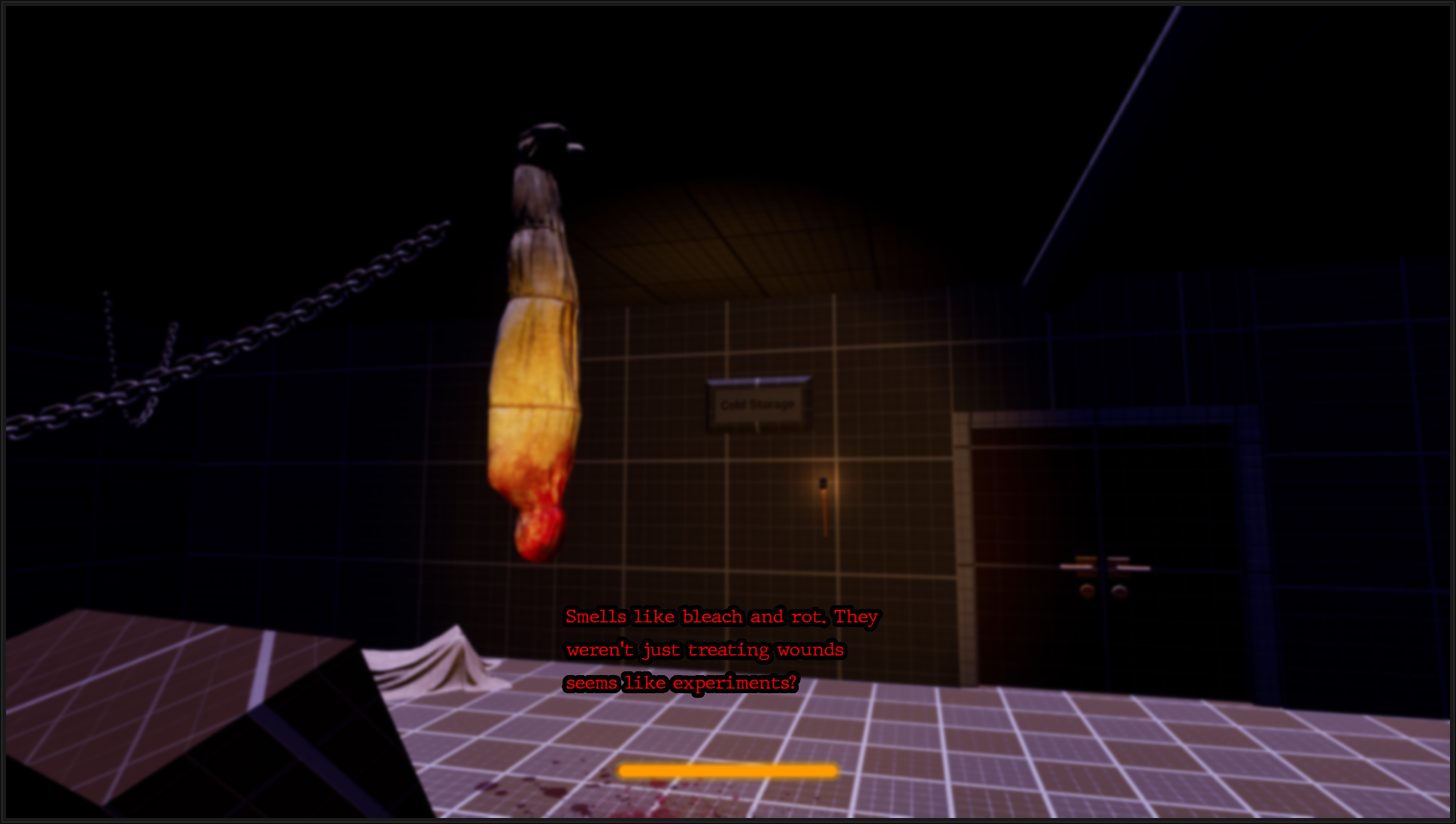
6.The Lab & The Cold Storage
Scene: You enter the lab, then the cold storage filled with bodies, and find the bolt cutters.
Design Techniques:
Environmental Storytelling (High Density)
Horror Framing— Bodies, violence staging
Hard Gate— Door locks behind player
Affordance— Vent as escape
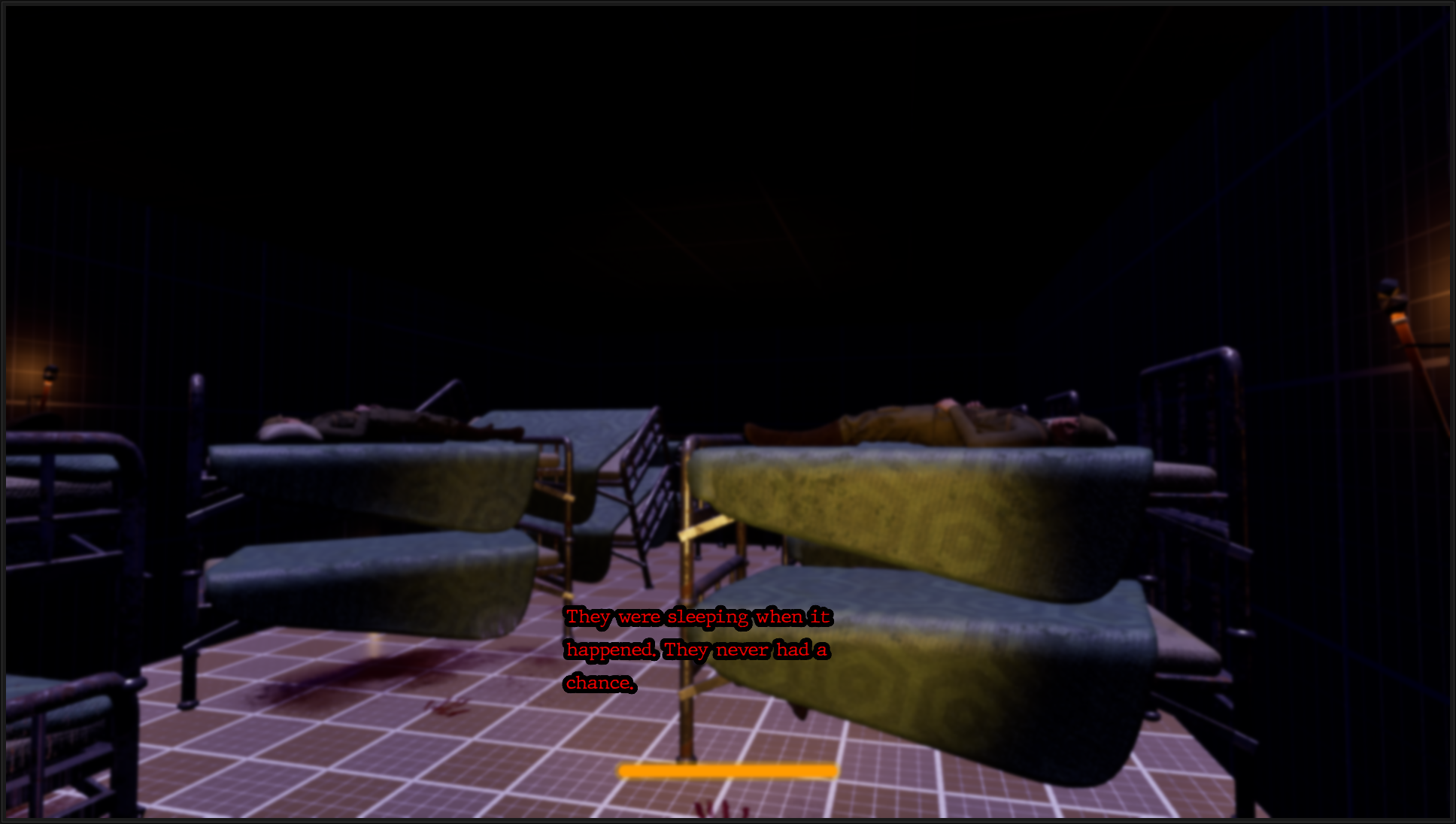
7.The Slaughtered Quarters
Scene: Soldiers killed in their sleep
Design Techniques:
Environmental Narrative
Pacing Contrast— Calm after intensity
Soft Gate— No going back
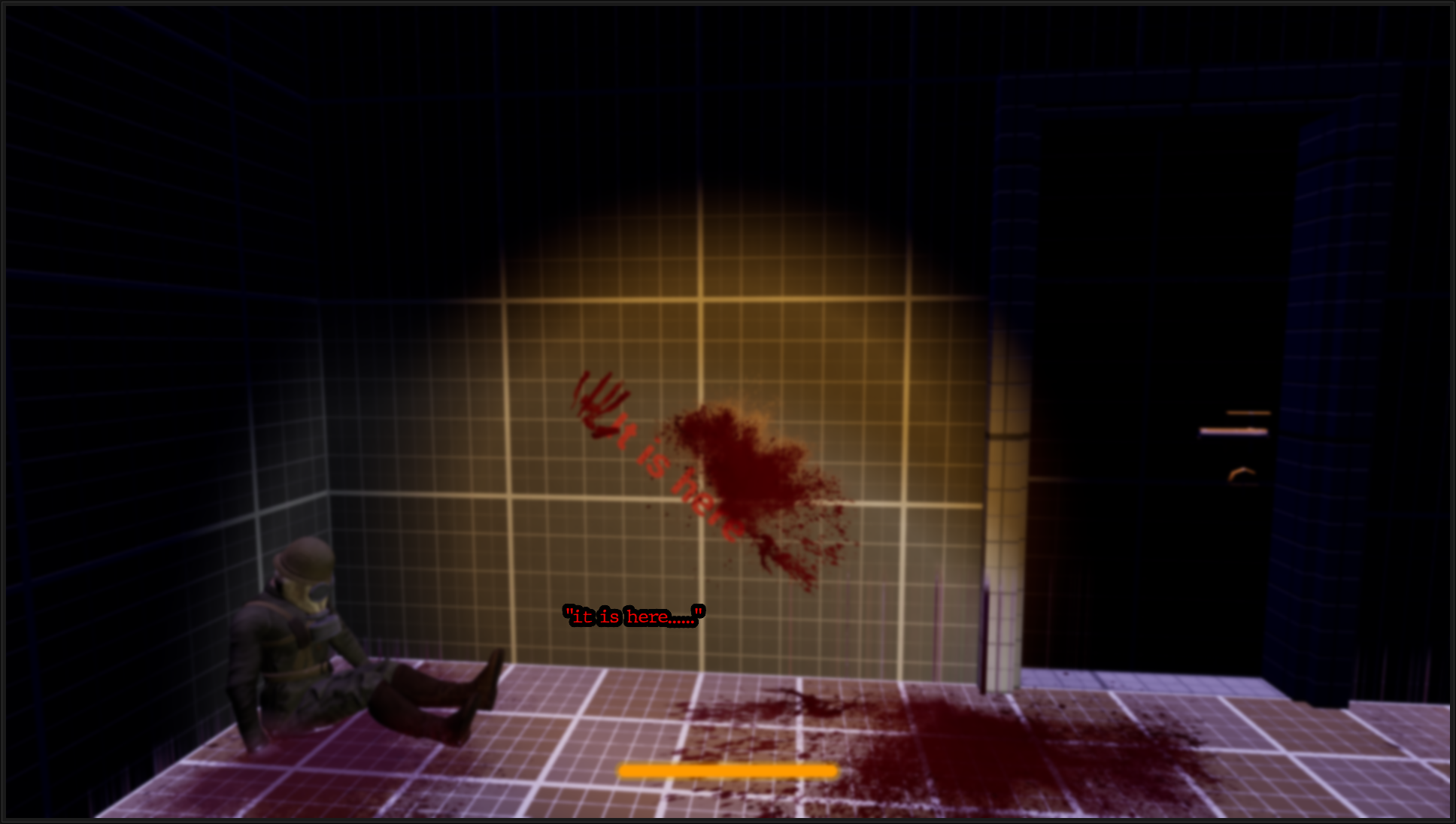
8. The "It's Here" Reveal
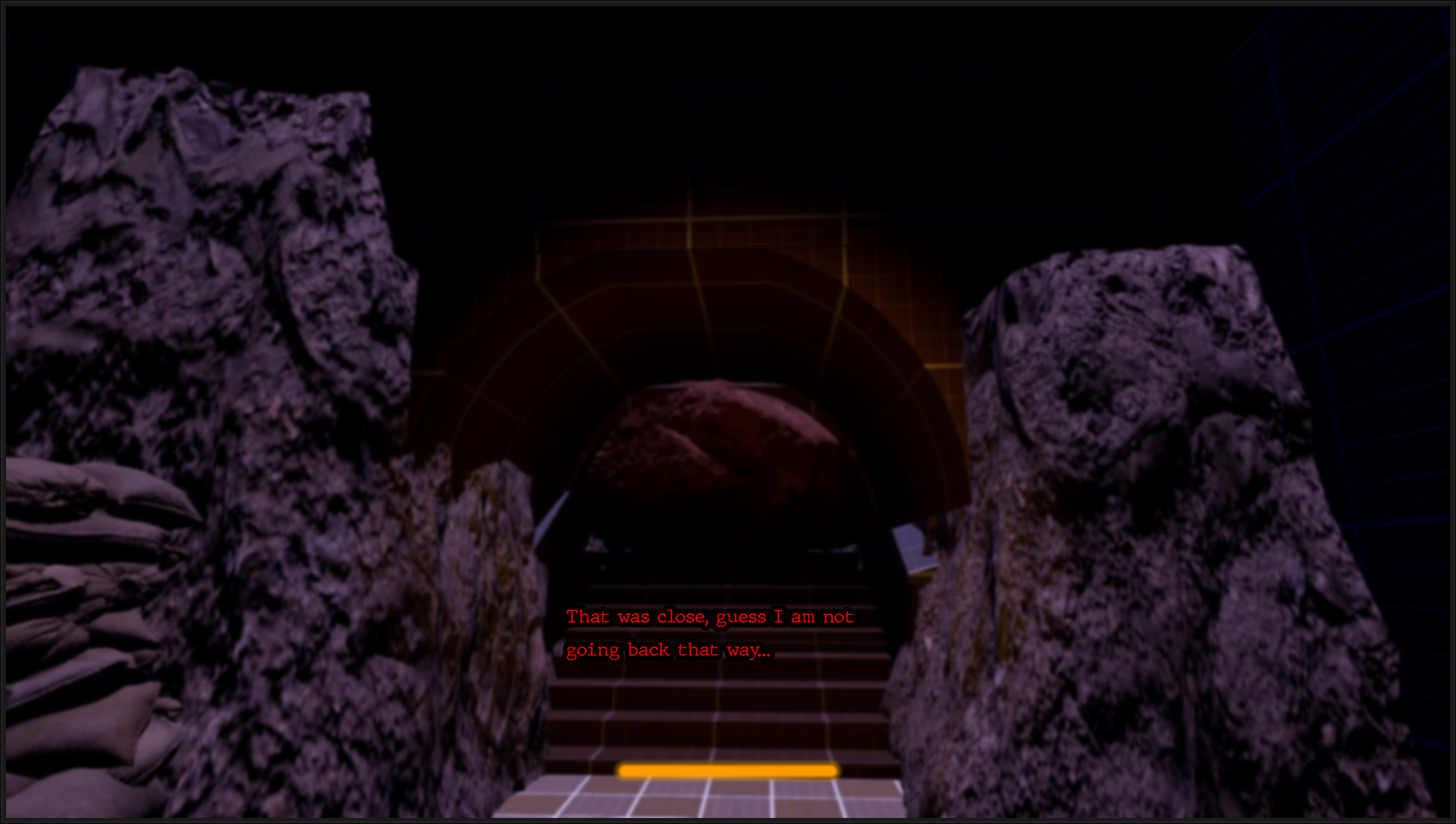
Scene: You reach the bathroom, see the message, and loop back to a familiar area
Design Techniques:
Spatial Looping— Player returns to known space
Player Orientation Reinforcement
Diegetic Indicators— Light + text
ACT III
9.The General & The Twist
Scene: General’s room → key → monster
Design Techniques:
Narrative Payoff— Truth revealed
Objective Clarity— Escape route
Horror Payoff
Expectation Subversion— Escape — death
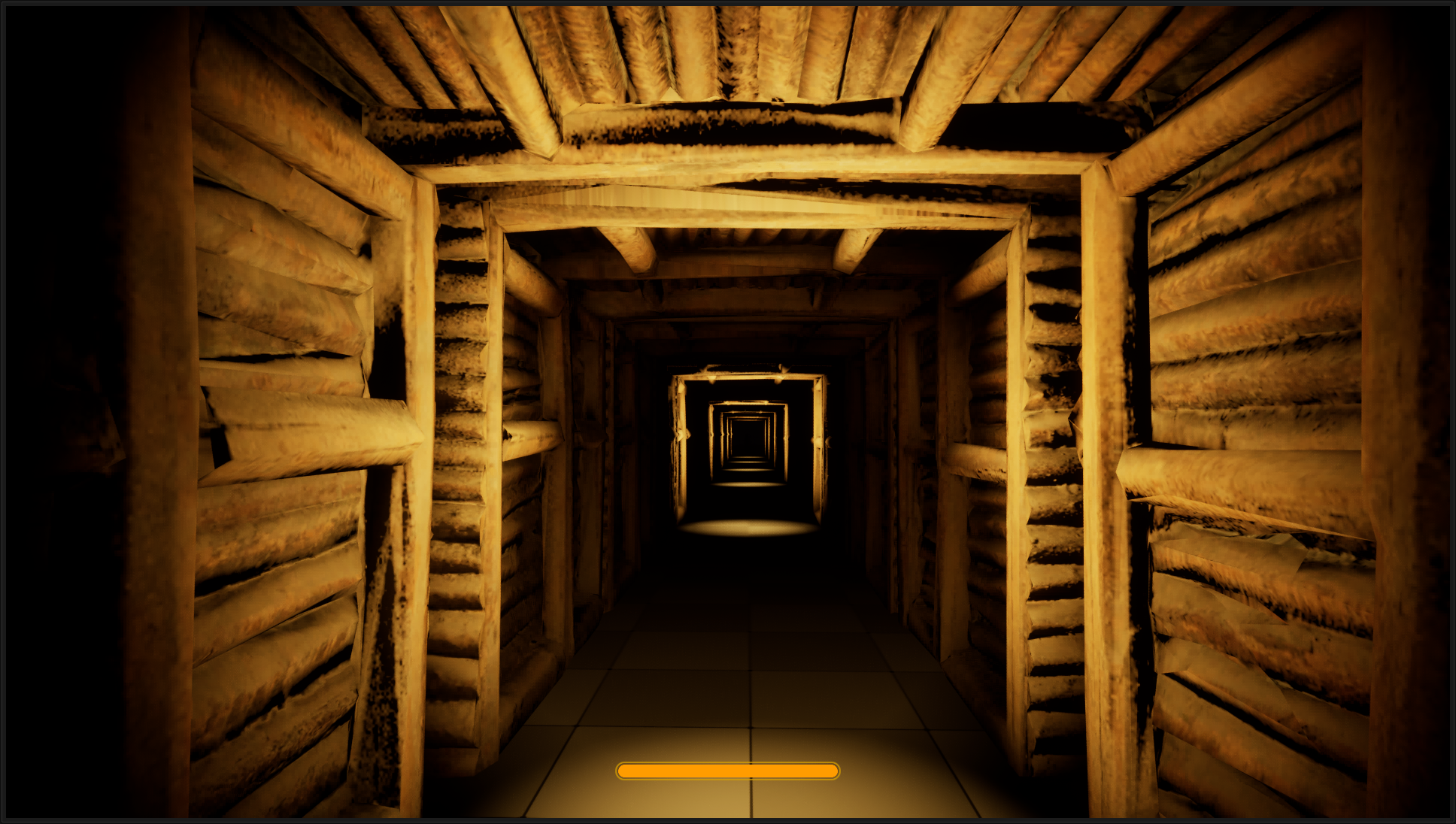
10.Ending
Scene: “The infection didn't spread. You did."
Design Techniques:
Climax
Objective Clarity— Escape route
Psychological Horror Payoff
BAIT & SWITCH
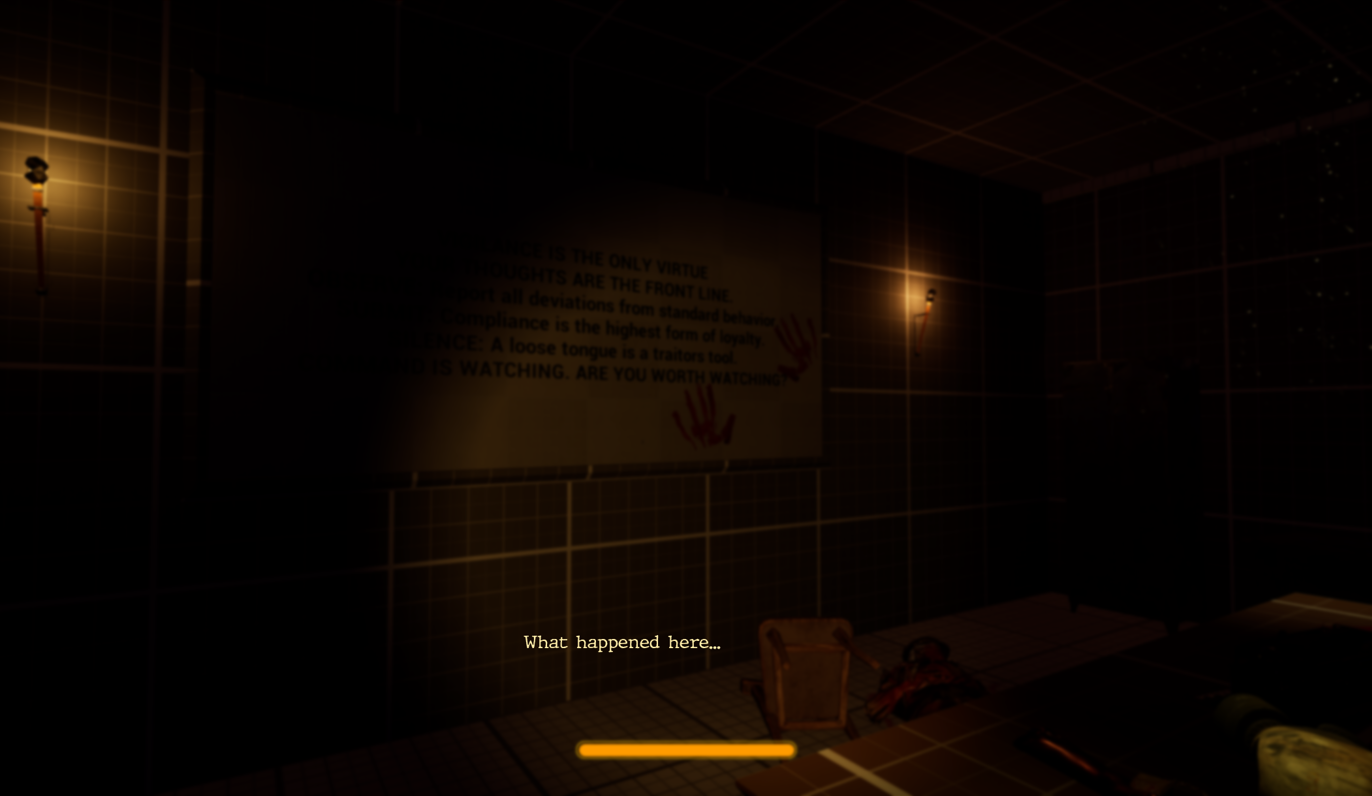
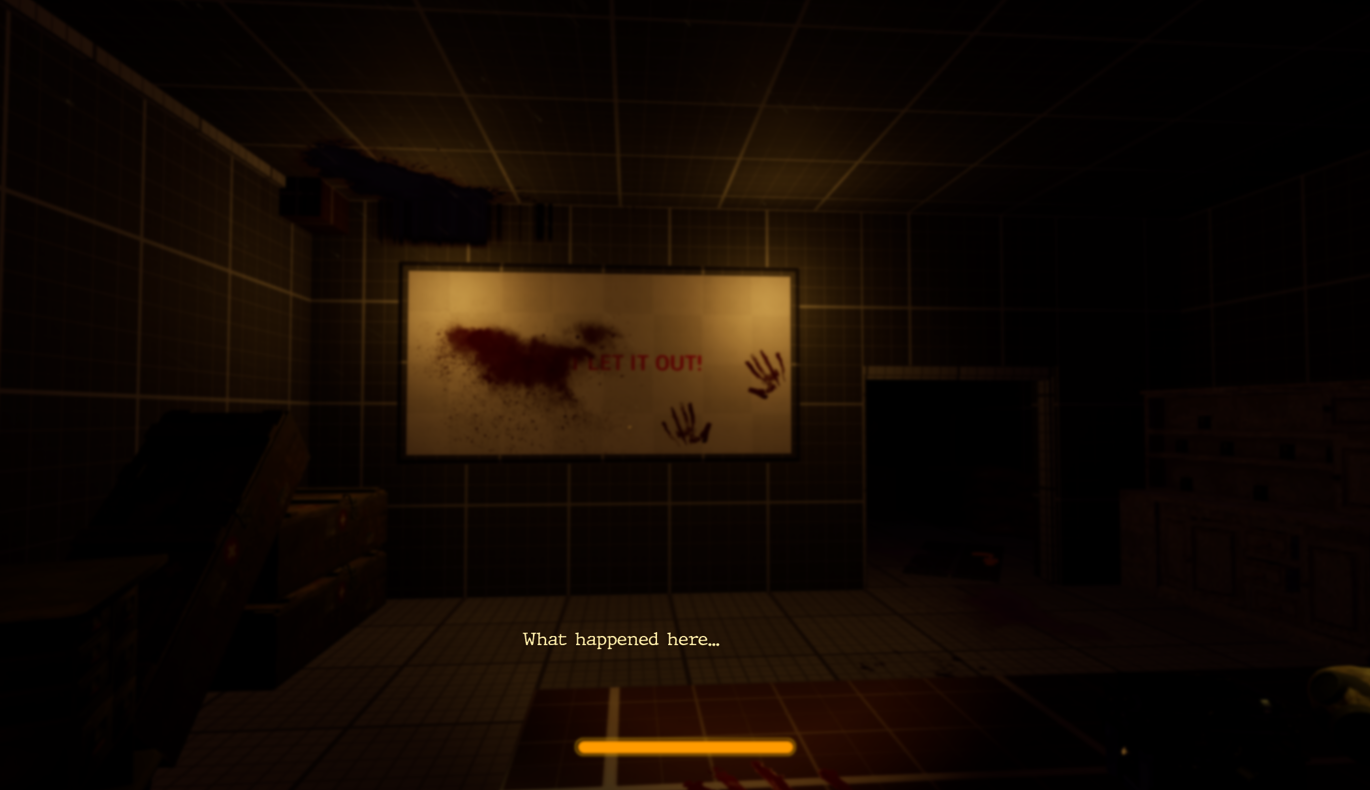
In these images, I’m using a clear bait-and-switch. The player is first drawn toward the dead doctor with the severed arm, but when they turn around, the blood-written message shifts the tone and creates a sense of unease.
LANDMARK
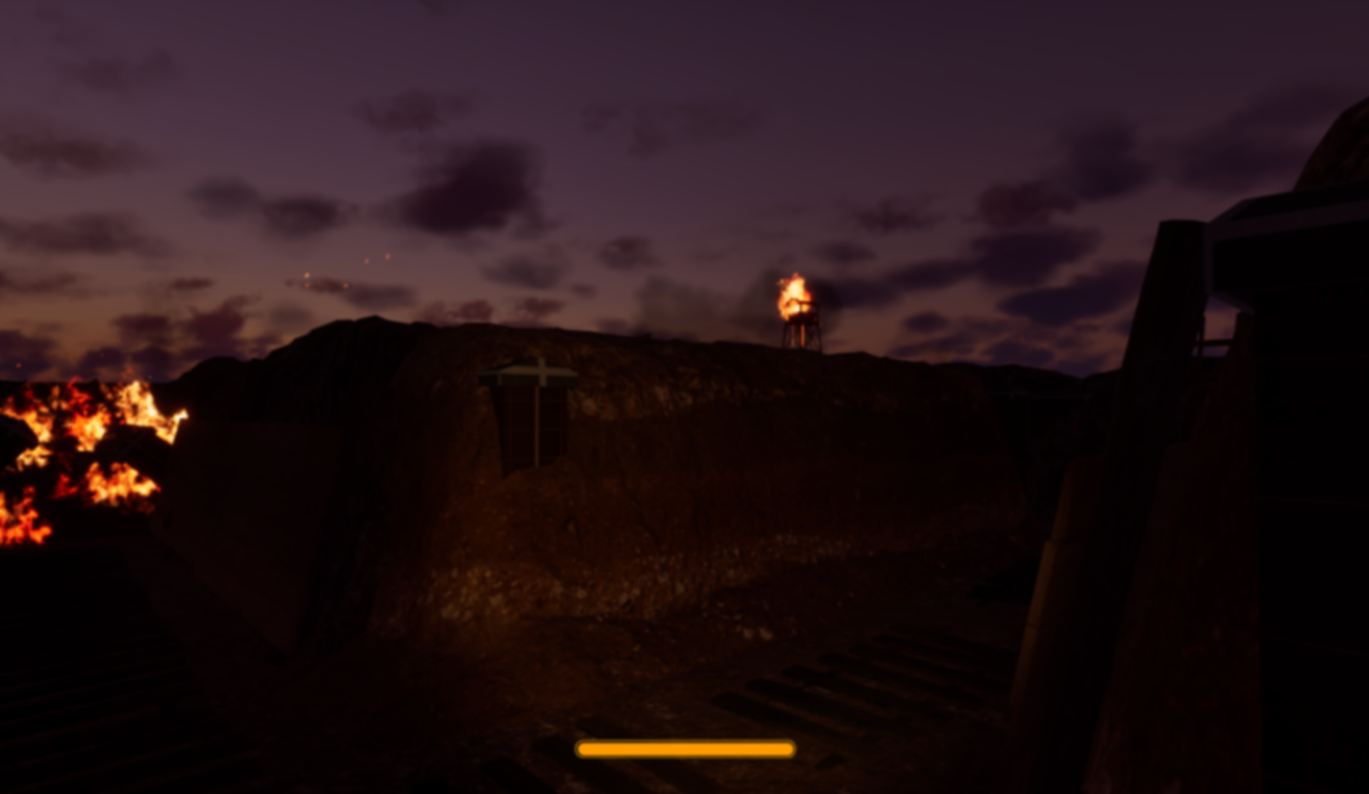
The burning tower is used as a primary landmark, anchoring the player’s navigation through the trench layout. As the player moves forward and the tower becomes more prominent, it reinforces direction and confirms that they are progressing along the intended path, even within a maze-like environment.
REFLECTIONS
Exterior Sound Design & Atmosphere
Creating the exterior section of the bunker was one of the most rewarding parts of the project. To capture the feeling of being trapped in a WWI trench during an active bombardment, I focused heavily on building a layered soundscape. Using audio assets from Soundsnap, I combined aircraft flyovers, distant explosions, and environmental ambience to create tension before the player even reaches the bunker.
Lessons Learned
If I were to revisit this section, I would invest additional time in refining the audio implementation. Specifically, I would design a dynamic footstep system in which playback speed and volume
Blueprints & Player Feedback
To enhance immersion, I used Blueprints to connect both audio and visual feedback to player movement. Footstep sounds were synchronized with a subtle head-bob effect, while a faint blur was applied to the player's vision throughout the experience. This visual treatment was designed to create a slight sense of unease and subtly suggest that something is not quite right.
Level Design & Pacing
Exterior
The exterior trench network was designed as a maze-like environment, using a burning radio tower as a primary landmark to guide navigation. I combined environmental storytelling, foreshadowing, and distant audio cues to build tension before the player enters the bunker. Collapsed trenches, damaged structures, and ongoing bombardment help establish both the setting and the threat.
Interior
Once the bunker entrance collapses, the experience shifts into a more controlled and linear progression. I use blood trails, environmental clues, and key points of interest as breadcrumbs to guide the player through the space. The layout gradually introduces narrative reveals while maintaining a clear critical path toward the General's office.
Reflections & Takeaways
Overall, I am proud of what I was able to achieve within the scope and time frame of the project. The bunker layout successfully creates a claustrophobic atmosphere, and I feel the combination of pacing, environmental storytelling, and navigation helps maintain tension throughout the experience.
If I were to continue developing the project, I would focus on improving visual readability in a few areas to make the critical path even clearer. I would also spend more time on iteration and polish, particularly in the final sequence.
One addition I would have liked to implement is a short cinematic ending using Sequencer. My vision was for the player to reach the light at the end of the tunnel and briefly believe they had escaped, only for the creature to appear at the last moment. This would have strengthened the final payoff and reinforced the level's central theme of false hope and inevitable horror.